E-Mail: commercial@golden-cereal.com Tel: +86-187-6172-1218
- All
- Product Name
- Product Keyword
- Product Model
- Product Summary
- Product Description
- Multi Field Search


Views: 0 Author: Site Editor Publish Time: 2026-07-01 Origin: Site


High-yield paddy processing is a precise balancing act between moisture control, mechanical force, and operational efficiency. Even a 2% drop in Head Rice Yield (HRY) can severely impact a commercial mill's bottom line. Modern B2B paddy processing requires transitioning from isolated equipment purchases to integrated, data-driven production lines. Plant managers can no longer rely on guesswork. You need systems operating in absolute harmony to safeguard your margins.
This guide breaks down the critical phases of post-harvest processing. It offers an evidence-based framework for evaluating modern drying technology. We will also explore how to select the right milling machine architecture. Our goal is to help you maximize profitability and minimize grain breakage. By mastering these core processing variables, you can confidently build a highly profitable, scalable operation.
Moisture is the baseline: Reducing harvest moisture content (MC) to exactly 14% using precision grain dryers is non-negotiable for minimizing kernel breakage during milling.
Yield dictates ROI: Equipment evaluation must prioritize Head Rice Yield (HRY) and energy consumption per ton over initial capital expenditure.
Scalability matters: Commercial rice mill machines should be evaluated on modularity, allowing for capacity upgrades (e.g., adding optical sorters or secondary polishers) without requiring a full facility redesign.
Compliance & Safety: Modern plant layouts must account for dust suppression and automated quality control to meet stringent international export standards.
Profitable milling operations rely entirely on process control. The cost of inefficiency manifests quickly across multiple stages. Sub-optimal processing leads directly to financial ruin for large facilities. For instance, poor drying practices cause thermal cracking. These internal fissures cause grains to shatter during whitening. You lose premium whole grain value instantly. Excessive bran powder production also signals mechanical inefficiency. It indicates overly aggressive milling pressure. We must mitigate these post-harvest losses early in the sequence.
You need strict success criteria to evaluate plant performance. Establish core metrics from day one. Head Rice Yield (HRY) remains your most critical metric. It measures the percentage of unbroken white kernels recovered from rough paddy. You must also track the total milling recovery rate. Throughput capacity, measured in Tons Per Day (TPD), dictates your output ceilings. Operating expenditure (OPEX) measures your ongoing utility and maintenance costs. Tracking OPEX helps you spot inefficiencies before they drain profits.
Buyers often debate between turnkey solutions and phased upgrades. Turnkey setups provide seamless integration. A single manufacturer designs the entire flow, eliminating bottleneck risks. However, they require massive upfront capital. Phased upgrades allow you to address immediate weak points. You might replace a failing huller first. Yet, mismatched capacities between old and new nodes often create hidden bottlenecks. You must ensure new equipment communicates well with legacy systems.
Moisture control dictates everything in grain processing. Freshly harvested paddy typically holds 20% to 24% moisture. You must reduce this to a safe milling moisture content of 14%. If you dry the paddy too rapidly, the kernel surface shrinks faster than the core. This moisture gradient causes severe internal fissuring. When fissured grains hit the huller, they shatter. A highly calibrated Grain Dryer ensures gentle, uniform moisture removal.
Selecting the right technology depends heavily on your daily volume and spatial constraints.
Dryer Type | Ideal Application | Operational Flexibility | Space Constraints |
|---|---|---|---|
Batch Dryers | Small to medium facilities handling multiple paddy varieties. | High. Easy to switch between different grain types. | Moderate footprint. Can be installed in clusters. |
Continuous Flow | Massive B2B operations processing single varieties continuously. | Low. Best for steady, uniform intake. | Requires significant vertical clearance and infrastructure. |
Heating sources heavily influence your daily OPEX. Natural gas furnaces burn cleanly but face volatile market pricing. Diesel burners offer reliability but carry high carbon emissions and fuel costs. Biomass furnaces utilizing rice husks provide exceptional sustainability. They burn your facility's own waste byproduct. This creates a circular energy loop. However, biomass systems require robust ash management protocols.
Modern operations also demand high automation. Look for PLC-controlled drying systems. These units feature automatic moisture monitoring sensors. They measure grain moisture in real-time and adjust furnace temperatures accordingly. This prevents catastrophic over-drying. Over-dried grains become brittle and chalky. Automated shutdown triggers protect your yield without requiring constant human supervision.
A commercial plant follows a strict mechanical sequence. Each phase prepares the grain for the next. Skipping maintenance in any single phase damages the final product. We can break this sequence down into four critical stages.
Pre-Cleaning and Destoning: Rough paddy arrives full of foreign materials. Straw, stones, mud balls, and metal fragments must be removed. Destoners use density differences and vibration to separate heavy stones. Magnetic separators pull out stray metal. This step prevents catastrophic damage to downstream machinery.
Hulling (Dehusking): This phase removes the tough outer husk. Modern mills primarily use rubber roll huskers. These feature two rollers spinning at different speeds. The sheer force strips the husk away. Rubber roll degradation is an operational reality. You must monitor wear patterns daily and schedule replacements. Pneumatic huskers automate pressure adjustments, offering more consistent husking rates than manual models.
Paddy Separation: No huller achieves 100% efficiency on the first pass. The output contains a mix of brown rice and unhusked paddy. Precision paddy separators utilize specific gravity differences. They bounce the mixture across an inclined tray. Brown rice moves one way, while unhusked paddy moves another. The system returns unhusked grains back to the huller without bottlenecking the main flow.
Whitening and Polishing: This stage transforms brown rice into white rice. It removes the bran layer. B2B facilities use a multi-pass whitening sequence. First, abrasive whiteners gently scrape the outer bran. Next, friction whiteners rub grains together to remove inner bran. Spreading this across multiple machines minimizes grain temperature rise. Heat causes breakage. Finally, water polishers inject a fine mist. This creates a silky, dust-free finish that adds significant commercial value.
When upgrading your plant, you evaluate machinery on more than just price. A commercial Rice Mill Machine represents a long-term infrastructure investment. You must align equipment specifications with your actual factory realities.
Manufacturers state capacity in Tons Per Day (TPD). You must match this stated throughput with your actual factory floor space. Do not cram equipment into tight corners. Machines need clearance for maintenance. Furthermore, consider your future expansion plans. A modular architecture allows you to scale up. You can drop in additional secondary polishers later without relocating your primary hullers.
Power consumption eats into your margins daily. Assess the kilowatt (kW) requirement per ton of processed rice. High-efficiency motors are mandatory for continuous 24/7 operation. Standard motors will overheat and trip breakers under sustained industrial loads. Look for machinery equipped with premium efficiency drives and intelligent variable frequency drives (VFDs). They reduce startup spikes and optimize power draw.
Downtime is the silent margin killer. A machine sitting idle waiting for parts bleeds money. Availability of spare parts builds crucial trust between you and the manufacturer. You will regularly replace screens, rubber rollers, and emery rolls. Evaluate local technician support networks. Ensure the supplier guarantees fast shipping for critical wear parts.
Industrial milling creates extreme vibration. Heavy-duty cast iron frames absorb these shockwaves. Lighter steel frames warp over time, leading to misaligned rollers and broken grain. Evaluate the use of stainless steel in contact areas. Hoppers, chutes, and sorting channels should utilize food-grade stainless steel. This prevents corrosion and meets strict sanitary compliance standards.
The final phases of production separate standard output from premium export-grade product. Advanced quality control systems ensure every bag meets buyer expectations.
Milled rice is never entirely uniform. You must separate whole kernels, large brokens, and small brokens. Rotary sifters and length graders handle this task. Indented cylinders catch small broken pieces while allowing whole grains to pass through. You can dial in the exact percentage of broken grains allowed in your final batch. This precision helps you meet strict retail market specifications.
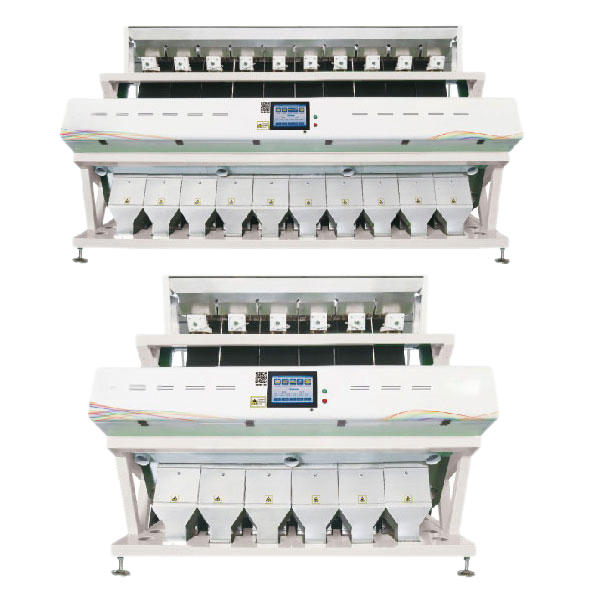
Optical sorting maximizes your ROI. These machines eject discolored, chalky, or diseased grains using high-speed air jets. Basic units use high-resolution RGB cameras to spot dark spots or red grains. Advanced models deploy InGaAs infrared camera technologies. Infrared sorting detects foreign materials that share the same color as rice. It easily spots transparent glass, light plastics, and pale stones. This guarantees exceptional purity.
Global markets enforce strict import standards. Aligning your sorting parameters with regional quality guidelines qualifies you for premium pricing. Organizations like JICA or IRRI provide benchmark data for acceptable defect ratios. Meeting these standards opens doors to lucrative export contracts. Automated sorting provides the verifiable data logs needed during compliance audits.
Transforming an equipment purchase into a functioning mill requires meticulous project management. Facility layouts demand strict adherence to industrial standards.
Industrial machinery requires specific structural support. Standard assumptions for ceiling height typically exceed 8 to 10 meters for vertical elevators. You must reinforce the structural load capacity of your concrete foundation. Destoners and sifters generate localized vibrations that crack thin concrete. Ventilation requirements are equally vital. High-capacity fans need clean intake air to cool machinery motors effectively.
Milling generates massive amounts of airborne particulate. You must integrate cyclonic dust collectors and highly efficient bag filters. This prevents the facility from becoming a hazard zone. Combustible dust risks are real and deadly. Grounding all ductwork prevents static spark ignitions. Ensuring worker safety reduces liability and maintains steady labor productivity.
Set realistic expectations for your facility launch. Delays happen when buyers underestimate the preparation needed. Keep these phases in mind:
Site Preparation: Reinforcing floors, cutting trenches, and setting anchor bolts.
Machinery Installation: Moving heavy units into place using cranes and specialized riggers.
Electrical Routing: Running high-voltage conduits and connecting central PLC cabinets safely.
Dry-Running: Testing motor rotation, elevator belt tracking, and pneumatic valve responses without grain.
Final Calibration: Introducing paddy, adjusting roller clearances, and fine-tuning the optical sorter ejectors.
Profitable paddy processing requires looking past the initial price tag. You must focus on moisture precision, mechanical durability, and minimal grain breakage. We have seen how critical it is to control the journey from raw harvest to polished kernel. Neglecting any step compromises the entire batch.
We strongly recommend mapping out your capacity limits closely. Always match your grain dryer capacity with the downstream milling throughput. If your dryer processes 50 tons daily but your mill only handles 30 tons, you create massive operational bottlenecks. Balance is the key to continuous output.
Start evaluating your current setup today. We encourage buyers to request a comprehensive facility audit. Bring in sample paddy for extensive testing before finalizing equipment choices. Consult with professional engineering teams to design a customized plant layout. This proactive approach secures your margins and future-proofs your business.
A: Base your capacity on your daily harvesting intake rates. Calculate the maximum volume of wet paddy arriving at your facility daily. Factor in the specific holding time required for your primary paddy variety to reach 14% moisture safely. Ensure your dryer outpaces your milling line slightly to build a buffer.
A: A highly efficient commercial mill targets an HRY between 55% and 65%. This depends heavily on paddy quality, grain variety, and drying consistency. Short-grain varieties typically yield higher HRY than long-grain varieties. Maintaining strict moisture control is the best way to consistently hit the upper end of this benchmark.
A: Replacement schedules vary based on tonnages processed, paddy type, and operating pressure. Typically, high-quality rollers last between 150 to 300 tons of processing. Harder paddy varieties wear the rubber down faster. Operators should inspect roller clearance daily and replace them once the husking efficiency drops below 85%.
A: Yes. Modern sorting machines feature a highly modular design. You can integrate them into the final stage before bagging. However, they require stable, moisture-free compressed air to operate the ejector valves. You must also ensure your facility has stable power and adequate vertical clearance for the feed hoppers.
A: Single-pass machines husk and whiten rice in one aggressive motion, causing high heat and significant grain breakage. They suit small village setups. Multi-pass systems spread the whitening across several machines. This lowers grain temperature, significantly reduces breakage, and maximizes HRY for commercial B2B operations.


