E-Mail: commercial@golden-cereal.com Tel: +86-187-6172-1218
- All
- Product Name
- Product Keyword
- Product Model
- Product Summary
- Product Description
- Multi Field Search


Views: 0 Author: Site Editor Publish Time: 2026-09-01 Origin: Site


Modern milling and agricultural facilities face immense operational pressure today. You must maximize yield retention while strictly controlling daily operational costs. Every broken grain or unexpected shutdown directly erodes your profit margins. Transitioning from legacy systems to modern machinery is never just a simple capacity upgrade. You must treat this shift as a critical risk-management decision. A poorly planned equipment installation can disrupt your entire continuous processing flow. This guide provides a strictly objective, evidence-based evaluation framework. We will help you assess, shortlist, and procure the most effective processing machinery available. You will learn how to identify true production bottlenecks and select mechanical components logically. We will also explore integration realities to ensure your next facility upgrade succeeds without major setbacks.
Upgrading agricultural processing lines requires mapping equipment capabilities to specific yield targets and acceptable breakage rates.
Integrating specialized units—such as a precision destoner or a high-efficiency paddy separator—can resolve localized operational bottlenecks without requiring full-line replacement.
Evaluating Total Cost of Ownership (TCO) must factor in maintenance downtime, energy consumption, and compliance with agricultural dust and food safety standards.
Vendor shortlisting should rely on verifiable Service Level Agreements (SLAs) and real-world throughput data, avoiding best-case-scenario marketing claims.
Every successful equipment procurement begins with a rigorous internal audit. You cannot improve operations until you understand your current baseline performance. Many facility managers mistakenly purchase higher-capacity machines without diagnosing the actual root cause of their throughput limitations.
You must audit your current operational limits before researching new equipment. Gather your production team and document the following three baseline metrics:
Throughput constraints: Measure the maximum continuous tons per hour your line handles before grain flow backs up.
Acceptable breakage percentage: Record the current volume of broken grains exiting the hulling and milling stages.
Energy consumption: Calculate the kilowatt-hours required to process one ton of finished product.
These baseline figures serve as your absolute minimum performance threshold. Any new machinery must demonstrably improve these metrics.
You must differentiate between localized failures and systemic line obsolescence. A localized problem usually requires a targeted upgrade. For example, excessive straw and debris entering your husker indicates a failing pre-cleaning module. Replacing just the pre-cleaner often restores optimal line flow. Conversely, systemic bottlenecks occur when multiple older machines fail to match modern input volumes. Commissioning an entirely new continuous-flow processing line becomes necessary when your baseline metrics show widespread inefficiencies across every stage.
The procurement team needs clear return-on-investment indicators. Do not rely on vague promises of better efficiency. Define measurable success criteria upfront. First, target reduced labor dependency. Modern equipment should require fewer manual adjustments during operation. Second, demand longer intervals between scheduled maintenance. Third, measure improvements in final grade output. A successful upgrade will yield a higher percentage of premium-grade whole grains, directly increasing market revenue.
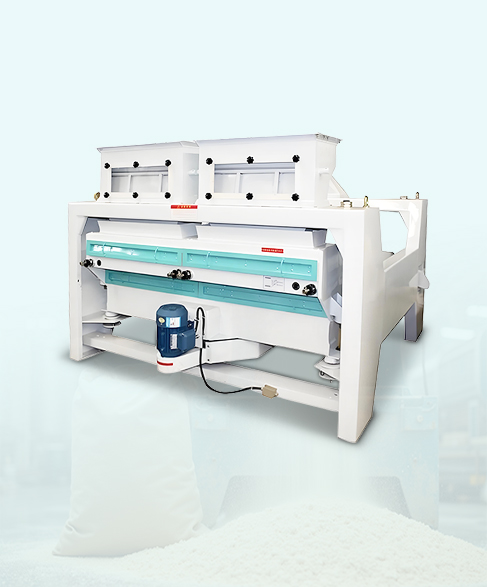
Building a high-yield milling operation requires integrating highly specialized machines. Each unit performs a distinct mechanical function. Understanding these core components ensures you specify the correct machinery for your crop type.
Raw agricultural products carry significant field debris. You must remove this debris early to ensure smooth downstream processing.
A heavy-duty Cleaning Machine serves as the first line of defense. It rapidly separates coarse impurities from the incoming harvest. The machine uses vibrating screens and aspiration channels. It effectively removes straw, string, dust, and large stones. Bypassing this step guarantees rapid wear on subsequent equipment.
Next, the grain flow requires density-based separation. A commercial Destoner handles this critical task. The machine utilizes fluidization and precise gravity decks. Air flows upward through the material bed, suspending lighter grains. High-density materials like glass, small stones, and metal pieces sink to the deck surface. The oscillating deck then discharges these heavy contaminants safely. This localized separation protects delicate downstream hulling rollers from catastrophic physical damage.
Once cleaned, the grain moves to the outer shell removal phase. This stage dictates your overall yield retention.
You must evaluate a Paddy Husker based on its roller pressure application. Pneumatic roll pressure systems adapt instantly to varying grain sizes. They maintain a consistent gap and maximize hulling rates. Mechanical spring-loaded systems often apply uneven pressure, increasing kernel breakage. Pneumatic systems generally offer superior precision and lower breakage.
After hulling, the resulting mixture contains husked grain, unhusked paddy, and loose shells. A high-efficiency Paddy Separator isolates the brown rice from the unhusked paddy. The separator uses angled, oscillating trays. Smooth brown rice slides downward, while the rough paddy travels upward along the tray surface. You must insist on equipment featuring easily adjustable tray strokes. Consistent flow requires frequent angle and stroke calibration.
The final processing stage removes the bran layer to produce clean, white grain. A commercial Rice Mill Machine performs this delicate whitening and polishing work.
You must understand the trade-offs between friction and abrasive milling techniques. Abrasive millers use emery rollers to scratch off the bran layer quickly. Friction millers force grains to rub against each other under high pressure inside an iron cylinder. Abrasive techniques keep grain temperatures lower but may leave a rougher surface. Friction techniques produce a highly polished end-product but generate significant heat. High grain temperatures elevate the risk of breakage. Advanced facilities often stage abrasive machines first, followed by friction polishers, balancing temperature control and aesthetic finish.
You must look past basic capacity specifications when comparing vendors. The best Grain Processing Equipment delivers consistent precision across unpredictable agricultural conditions.
Many buyers falsely assume higher capacity directly equals superior machinery. True operational value lies in consistent precision, not raw speed. You must evaluate how the equipment performs under stress. Incoming grain moisture levels fluctuate wildly during harvest seasons. A machine rated for 10 tons per hour might crush damp grain if it lacks adaptive feed controls. Demand performance data showing yield retention across various moisture percentages. Precision always generates more revenue than brute-force throughput.
Industrial processing destroys weak materials quickly. You must focus intensely on the material science governing the internal components.
Equipment Material Quality Comparison
Component Type | Standard Material | High-Performance Material | Operational Impact |
|---|---|---|---|
Hulling Rollers | Standard Black Rubber | Advanced Polyurethane | Polyurethane dramatically extends operational hours before replacement. |
Separation Screens | Mild Steel | Abrasion-Resistant Stainless Steel | Stainless steel prevents rust and maintains exact hole tolerances longer. |
Discharge Chutes | Painted Carbon Steel | Ceramic-Lined Steel | Ceramic lining prevents premature wear from high-velocity grain friction. |
You cannot compromise on facility safety and regulatory compliance. Agricultural processing generates massive volumes of highly combustible dust. Your selected equipment must feature integrated, ATEX-compliant dust management ports. OSHA guidelines dictate strict noise exposure limits for operators. Look for enclosed machinery cabinets featuring internal acoustic dampening. Furthermore, ensure all product contact zones utilize certified food-grade materials to prevent chemical contamination.
Modern processing requires intelligent oversight. Programmable Logic Controller (PLC) integration transforms a manual line into an adaptive system. Evaluate the necessity of remote monitoring for your facility. PLC systems offer automated fault detection, instantly shutting down feeds if a downstream motor overloads. Additionally, recipe management software allows operators to switch processing parameters instantly between different grain varieties. This eliminates hours of manual calibration.
Procurement only solves half the puzzle. Physical installation and operator adoption present severe risks to your project timeline.
You must address the physical realities of integrating new machinery into your existing floor plan. Processing equipment relies heavily on gravity flow. Vertical clearance becomes a major constraint when installing bucket elevators and multi-deck separators. You must also evaluate structural support. High-capacity vibrating equipment generates intense dynamic loads. If your floor grating or mezzanine structure lacks sufficient rigidity, harmonic vibrations will literally shake adjacent machinery apart. Always conduct a structural engineering review prior to purchase.
Complex digital interfaces often intimidate veteran machine operators. You face a high risk of performance dropping immediately post-installation. An operator unfamiliar with a touchscreen PLC will likely run the machine below optimal capacity to avoid triggering alarms.
Best Practices for Operator Adoption:
Demand comprehensive, multi-day on-site training from the vendor.
Request printed, laminated quick-reference guides for routine fault codes.
Assign a dedicated internal "super-user" to master the system first.
Mandate a secondary vendor visit 30 days post-installation to correct bad habits.
Engineers often design brilliant machines that prove impossible to service. You must inspect the equipment design for "wrench access." Technicians need unhindered physical access to replace drive belts, swap aspiration screens, and reach grease nipples. If your team must dismantle adjacent machinery just to change a polyurethane roller, preventive maintenance schedules will fail. Poor accessibility guarantees increased unexpected downtime.
You must aggressively vet equipment manufacturers. A shiny brochure guarantees nothing. Your procurement logic must prioritize verifiable operational data and robust post-sale support infrastructure.
Never accept generic test-facility data. Vendors optimize test centers for perfect conditions, using pre-cleaned, moisture-stabilized grain. You must demand documented case studies featuring your specific crop type and production scale. Better yet, mandate reference site visits. Speak directly with current facility managers using the proposed equipment. Ask them specifically about software glitches and bearing failures. Real-world reference checks expose weaknesses marketing materials hide.
Frame your vendor relationship entirely around post-sale support. A comprehensive warranty means nothing if the manufacturer ships critical parts from overseas on a six-week lead time. You must evaluate the vendor's local parts inventory. Demand a guaranteed Service Level Agreement for emergency breakdown responses. If a main motor fails during peak harvest, you need a replacement on-site within 24 hours. Clarify exactly which wear parts remain excluded from the standard warranty coverage.
Avoid committing to a multi-million dollar full-facility overhaul based solely on technical drawings. Negotiate trial periods for critical single machines whenever possible. If you need a new cleaning module, purchase and install one unit first. Measure its performance against your baseline metrics for 60 days. A phased rollout minimizes your capital risk. It also allows your operators to build technical familiarity gradually before managing an entire automated line.
Successful procurement of agricultural processing machinery requires deep technical due diligence. You must balance upfront capital expenditure strictly against long-term reliability and continuous yield optimization. Always prioritize measurable operational outcomes—like reduced kernel breakage and higher uptime—over raw throughput claims. Demand absolute transparency from your vendors regarding equipment materials and localized support capabilities.
As your next step, conduct a rigorous internal audit of your current line capacity. Gather your baseline throughput and energy metrics. Then, contact a specialized engineering consultant to verify your facility's structural readiness. Request customized technical specification comparison sheets from at least three vetted manufacturers to begin your evidence-based evaluation.
A: You must match the continuous flow rates precisely in tons per hour. The destoner's capacity must meet or slightly exceed the cleaning machine's output. This prevents material backups upstream. If the destoner processes material too slowly, the entire line bottlenecks. If it runs too fast, the deck starves, ruining separation efficiency.
A: Rubber rollers typically last between 150 and 300 operational hours. The exact lifespan depends heavily on the incoming grain variety. Grain with high silica content acts as a severe abrasive, destroying standard rubber quickly. Switching to advanced polyurethane rollers can sometimes double the operational hours before requiring a replacement.
A: Yes, a single separator can process different varieties. However, it requires highly adjustable mechanisms. You must physically adjust the tray stroke, tilt angle, and feed distribution rates for each specific grain type. Switching between short-grain and long-grain batches mandates a full machine re-calibration to maintain separation accuracy.
A: Facilities often overlook routine preventative maintenance labor. Dust extraction systems require frequent filter replacements to prevent combustible buildup. Energy consumption can spike violently if intake valves are poorly calibrated. Finally, unexpected mechanical downtime severely damages daily profitability, making rapid spare parts access critical to facility success.


