E-Mail: commercial@golden-cereal.com Tel: +86-187-6172-1218
- All
- Product Name
- Product Keyword
- Product Model
- Product Summary
- Product Description
- Multi Field Search


Views: 0 Author: Site Editor Publish Time: 2026-07-23 Origin: Site


Rice milling is a sequential, closed-loop process. Machine misalignment leads to high breakage rates, grain loss, and reduced profitability. Many operators underestimate how interconnected these processing stages truly are. A husking unit and a separation unit are never interchangeable. They act as consecutive, dependent components in your daily milling line. You cannot optimize one stage without simultaneously addressing the other.
This article clarifies their distinct mechanical roles. We will explore how their capacities must seamlessly synchronize to maintain a high-quality product flow. You will understand why running equipment at maximum capacity often degrades final grain quality. Finally, we will show plant managers how to evaluate these machines for facility upgrades. By understanding these dynamics, you can make informed procurement decisions and prevent costly production bottlenecks.
To master milling efficiency, you must separate the physical action of shelling from the physical action of sorting. Each machine solves a unique business problem using entirely different principles of physics.
The primary business problem solved here involves converting rough paddy into brown rice. You must accomplish this without fracturing the fragile kernel inside. A Paddy Husker performs this aggressive task. It strips the protective outer shell off the harvested grain.
The mechanism relies on sheer force and friction. Most modern facilities utilize dual rubber rollers. These rollers spin in opposite directions at different speeds. As the rough rice passes between them, the speed differential strips the husk away. Advanced models use pneumatic pressure to maintain consistent force against the grain as the rubber inevitably wears down.
The output reality is never perfectly clean. The machine yields a chaotic mixture. You get brown rice, loose husks, and a certain percentage of unhusked paddy. An integrated aspirator usually blows the lightweight husks out of the stream. However, the unhusked grains remain mixed among the brown rice.
The separator solves a completely different business problem. It prevents unhusked paddy from entering the rice whitener or polisher. If rough, abrasive paddy enters downstream equipment, it severely damages polishing stones. It also degrades the final product quality. The Paddy Separator acts as your facility's strict quality gateway.
Its mechanism utilizes a vibrating, tilted tray system. It exploits differences in specific gravity, physical size, and surface friction. Brown rice is smooth and heavy. Unhusked paddy is rough, lighter, and larger. As the dimpled tray oscillates, the smooth brown rice moves up the incline. The rough, buoyant paddy bounces down toward the lower discharge end.
This process creates three distinct output streams. Pure brown rice moves forward to the whitening stage. Pure unhusked paddy returns to the husker. A mixed stream recirculates continuously inside the separator until sorted.
Primary Function Output Analysis
| Machine Component | Primary Physical Action | Dominant Output Stream | Action Upon Unhusked Grain |
|---|---|---|---|
| Husking Unit | Compression and Friction | Brown Rice + Husks + Unhusked Paddy | Passes it forward to the next stage |
| Separation Unit | Gravity and Oscillation | Pure Brown Rice | Returns it to the starting point |
Understanding individual machine mechanics provides a foundation. However, true operational efficiency emerges only when you connect them. The relationship forms a continuous, closed-loop workflow.
The physical workflow relies on constant recirculation. You cannot design a linear milling line. Instead, you must build a return loop.
This architecture ensures no raw grain escapes the system unprocessed. It also prevents downstream contamination.
Inexperienced operators often attempt to set the husking pressure too high. They want 100% efficiency on the first pass. This is a critical mistake. Tighter roller pressure drastically increases the broken rice percentage. Broken grains sell for significantly less money. They also complicate the grading process.
A reliable separation unit allows operators to run the husking rollers at a safer, more conservative shelling rate. Industry standards typically suggest an 85% shelling rate. Operators keep the pressure moderate. They know the separation tray will successfully catch the remaining 15% and recycle it. This multi-pass strategy maximizes whole-kernel yield. The separation unit serves as an insurance policy against grain fracturing.
The synchronization of these two machines strictly dictates your overall tons-per-hour (TPH) capacity. If one machine lags, the entire plant suffers. The husking unit dictates the raw intake speed. The separation unit dictates the refined output speed. You must balance both to maintain a steady material flow. An interruption in the return loop quickly creates a backlog. This backlog forces operators to power down the entire line.
When purchasing a new Rice Mill Machine component, you must look beyond basic price tags. Equipment durability and automation capabilities determine long-term profitability.
You must carefully assess the roller operation mechanisms. Compare pneumatic control against traditional mechanical operation. Pneumatic systems automatically adjust roller pressure as the rubber degrades. This automation maintains a highly consistent shelling rate without constant human intervention.
Cooling and aspiration represent another vital dimension. Friction generates intense heat. Look for integrated air-cooling features. Proper airflow extends the rubber roller lifespan significantly. This reduces operational downtime and lowers your consumable replacement frequency.
Consider vibration and footprint. Heavy-duty cast iron bases provide essential stability. High-speed rollers create intense vibrations. A robust frame prevents these vibrations from shaking the machine out of alignment.
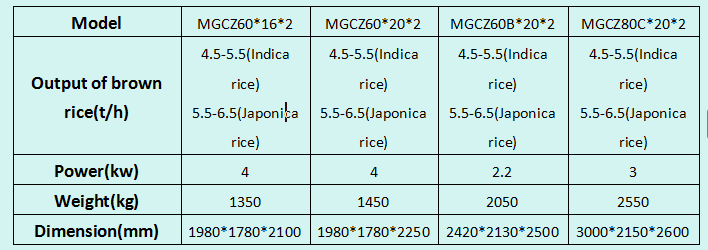
Tray volume capacity dictates separation performance. You must choose between single and double-body designs. Double-body designs become strictly necessary for high-capacity mills processing above 4 to 5 TPH. They provide massive surface area to maintain sorting precision without slowing down the primary line.
Examine tray material and wear resistance carefully. Assess stainless steel options versus standard steel dimpled trays. Stainless steel resists pitting and wear. It maintains a highly consistent friction coefficient over years of continuous use. If the dimples wear flat, the machine loses its ability to grip the brown rice.
Sensor integration represents a modern necessity. Look for automated stop-and-start sensors. If the machine runs empty, it disrupts the delicate gravity balance. Sensors prevent the tray from oscillating when no grain is present.
Evaluation Criteria Comparison
| Assessment Category | Husking Unit Focus | Separation Unit Focus |
|---|---|---|
| Automation | Pneumatic pressure regulation | Empty-load detection sensors |
| Durability Focus | Rubber roller heat resistance | Stainless steel dimple integrity |
| Throughput Scaling | Roller width and motor RPM | Single vs. Double tray bodies |
| Structural Stability | Cast-iron shock absorption | Vibration distribution balance |
Even the highest-quality equipment fails when integrated poorly. Plant managers frequently encounter the following operational bottlenecks.
This is the most common error in facility upgrades. Managers upgrade the husking unit to a high-yield model without upgrading the separation unit. The new unit pushes grain too fast. The old, undersized tray system cannot process the volume. The mixed stream overflows. This bottleneck forces operators to slow down the husking unit, completely negating the return on investment of the new equipment.
Improper grain drying negatively affects both machines. Grain moisture must remain near 14% for optimal processing.
Certain maintenance tasks remain invisible until major failures occur. Failing to level the separation trays accurately causes material to pool on one side. This destroys the sorting purity. Ignoring asynchronous roller wear on the husking unit leads to uneven pressure. One side of the grain cracks while the other side remains unshelled.
You need a structured approach to upgrade your facility. Do not purchase equipment randomly based on promotional brochures. Follow a strict shortlisting logic.
Guide your buying decision by identifying your primary daily issue. Is the plant suffering from high broken grain rates? This symptom points directly to poor calibration or obsolete pneumatic controls on the husking unit. Are you finding rough impurities during the whitening stage? This symptom points to severe separation inefficiency. You must replace or expand the tray system.
Consider future-proofing your facility. Select modular double-paddy separators. Modular systems allow you to handle increased throughput later. If you plan to buy a larger husking machine in three years, buy a separation machine today that can handle that future volume.
Before finalizing any purchase order, execute these three critical actions:
The processing of rough paddy demands both aggressive force and delicate precision. The husking unit executes the aggressive task of shelling. The separation unit executes the precise task of density sorting. Neither can operate profitably without the other. They share a symbiotic relationship in the modern milling line.
Decision-makers must prioritize system compatibility. Always match TPH capacities over isolated machine features. A moderately priced, perfectly synchronized line outperforms a mismatched line of expensive machines every time.
Do not buy standalone components blindly. We strongly encourage plant managers to consult systems engineers or specialized equipment manufacturers. A tailored line audit will reveal your true bottlenecks. Upgrade your facility comprehensively to ensure maximum whole-kernel yield and sustained profitability.
A: No. Without a separator, unhusked paddy enters the whitener. This leads to excessive friction, severe broken grains, and rapid wear on expensive polishing stones. It ultimately results in a visually defective, unsellable final product.
A: Setting a husker's pressure high enough to shell 100% of the grain on the first pass causes severe grain breakage. A multi-pass approach using a separator maximizes your whole-kernel yield and protects your profits.
A: Symptoms include a constant backlog of material in the separator hopper, a sudden drop in overall line throughput, or operators being forced to increase husking pressure just to reduce the sorting load.
A: Yes. Different rice varieties have distinct specific gravities and surface textures. Operators must constantly adjust the separator tray angle and vibration speed to ensure optimal pure brown rice recovery.


