E-Mail: commercial@golden-cereal.com Tel: +86-187-6172-1218
- All
- Product Name
- Product Keyword
- Product Model
- Product Summary
- Product Description
- Multi Field Search


Views: 0 Author: Site Editor Publish Time: 2026-06-08 Origin: Site


Selecting the structural material for an agricultural facility represents a high-stakes capital expenditure decision. This fundamental choice permanently dictates your operational efficiency, scalability, and regulatory compliance. You cannot easily correct core structural limitations once heavy equipment installation begins. Modern agriculture places unprecedented demands on facility infrastructure. Agribusinesses must accommodate larger automated machinery. They enforce stricter hygiene protocols and demand accelerated commissioning timelines. You simply cannot rely on outdated building conventions to solve modern production challenges.
This article delivers an objective, engineering-based comparison between modern structural materials. We examine critical metrics like clear-span capabilities, sanitation standards, and construction velocity. Operations managers and agribusiness owners will discover how to finalize their facility blueprints with absolute confidence.
Speed & ROI: A pre-engineered steel structure typically reduces construction timelines by 30-50% compared to cast-in-place concrete, accelerating time-to-revenue.
Space Optimization: Steel excels at providing clear-span interiors (up to 300+ feet) essential for heavy processing machinery, whereas concrete requires load-bearing columns.
Hygiene & Maintenance: Concrete offers superior thermal mass for temperature control, but requires rigorous sealing to prevent moisture retention; galvanized steel prevents pest nesting but requires anti-condensation engineering.
The Pragmatic Verdict: Most modern processing plants utilize a hybrid approach: steel structures for the primary frame and roof, combined with concrete foundations and half-walls for heavy washdown zones.
Establishing baseline requirements proves essential before comparing specific construction materials. You cannot evaluate a building without knowing its daily operational burdens. Agricultural processing environments endure unique stresses not found in standard commercial warehouses. Therefore, we must define facility success through three critical lenses.
Sanitation & Compliance: Meeting FDA, USDA, or local food safety standards remains non-negotiable. Your facility requires aggressive washdown capabilities. It must also actively deter pest infiltration. Surface porosity directly impacts how easily your team achieves regulatory compliance daily.
Operational Layout: Modern processing demands unobstructed floor space. You need room to accommodate complex conveyor systems, high-speed optical sorters, and large-scale packaging equipment. Interior columns directly hinder equipment placement and disrupt optimal workflow paths.
Scalability: Your production needs will likely shift in five to ten years. Expanding the facility footprint should occur without halting ongoing operations. A successful building design allows simple modular additions. You want a framework that easily adapts to future market growth.
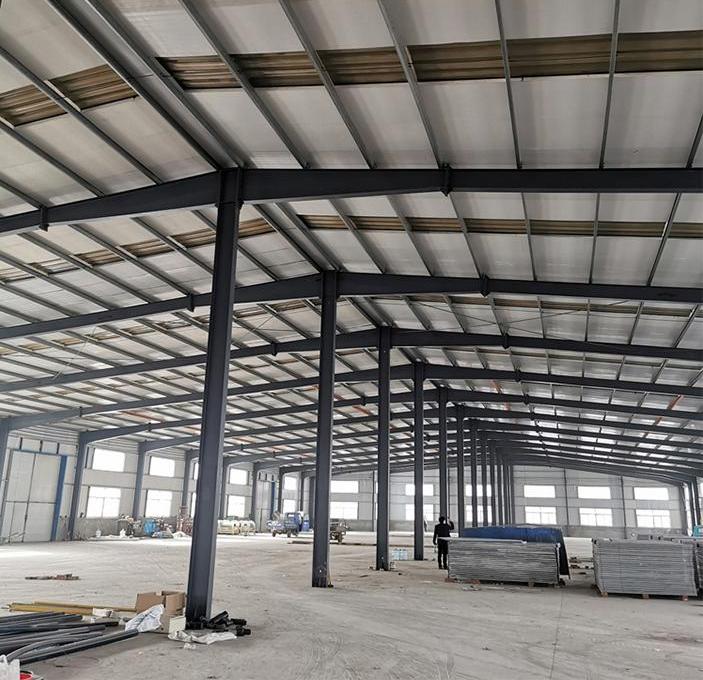
Let us execute a direct, dimension-by-dimension comparison based on objective engineering realities. We avoid subjective preferences and focus strictly on material performance under heavy agricultural stress.
Evaluation Criteria | Concrete Building | |
|---|---|---|
Construction Speed | Slow; weather-dependent curing times. | Fast; prefabricated off-site assembly. |
Clear Span Ability | Limited; requires interior support columns. | Excellent; supports spans exceeding 300 feet. |
Pest Resistance | Good; but micro-cracks harbor insects. | Superior; completely inorganic materials. |
Thermal Mass | High; stabilizes temperatures naturally. | Low; requires Insulated Metal Panels (IMPs). |
Poured concrete construction relies heavily on intense manual labor. Curing times depend entirely on favorable weather conditions. Rain or freezing temperatures halt progress immediately. Furthermore, fluctuating local aggregate costs create significant budget unpredictability. You often face extended project timelines that delay your market entry.
Alternatively, a pre-engineered Steel Structure utilizes prefabricated components. Manufacturers fabricate the entire framework off-site in controlled conditions. Construction crews simply bolt the precision-engineered pieces together upon delivery. This modular approach allows for rapid assembly. It largely eliminates weather-related delays. You benefit from highly predictable material costs during the planning phase. However, you must monitor global metal price volatility during procurement.
Concrete framing inherently limits the functional span between support columns. You must install load-bearing pillars at frequent intervals to support the heavy roof. These intruding elements dictate your interior floor plan. They severely hinder future layout modifications when upgrading large sorting machines.
By contrast, a rigid Steel Structure boasts an exceptional strength-to-weight ratio. This unique property allows engineers to design massive clear-span interiors. You can achieve unobstructed floor spaces exceeding 300 feet in width. This maximizes usable square footage for sprawling processing lines. Plant managers gain complete freedom to reposition bulky equipment safely and efficiently.
Concrete possesses a fundamentally porous nature. The material sustains micro-cracking during natural foundation settling. These tiny fissures easily harbor dangerous bacteria if left untreated. You must regularly coat the walls with thick industrial epoxies to maintain food-grade compliance. On the positive side, concrete provides unparalleled impact resistance against heavy loaders.
Inorganic metal inherently deters pests like termites and rodents. They simply cannot burrow into or consume the structural framing. However, agricultural environments feature harsh cleaning chemicals and high ambient moisture. These factors accelerate corrosion. You must specify proper galvanization or advanced coating systems. Correct surface treatment ensures long-lasting resistance to daily chemical washdowns.
Concrete production generates a massive embodied carbon footprint. The cement manufacturing process releases significant emissions. Yet, a finished concrete wall offers excellent thermal mass. It absorbs and releases heat slowly. This characteristic stabilizes interior temperatures naturally. You consume less energy to cool expansive raw material storage zones.
Conversely, structural metals prove highly recyclable at the end of their lifespan. This factor significantly boosts your ESG (Environmental, Social, and Governance) compliance. However, bare metal conducts heat rapidly. You must integrate insulated metal panels (IMPs) into the building envelope. IMPs perfectly match concrete’s energy efficiency while actively preventing destructive internal condensation.
Material choice shifts dramatically based on your specific agricultural use case. No single material universally solves every production challenge. We must analyze how structural performance aligns with distinct industry demands.
Grain Storage & Milling
Metals absolutely dominate the grain storage and milling sectors. Aeration systems integrate flawlessly into the rigid framing. Construction crews erect large flat storage sheds incredibly fast. The inherent pest resistance keeps bulk commodities completely safe from infestation. Concrete silos offer superior buffering for highly specific temperature zones. Yet, they remain entirely cost-prohibitive for expansive flat storage layouts. Most operators default to modular metal frameworks to maximize storage volume.
Meat & Dairy Processing
Meat and dairy processing plants face brutal daily conditions. The necessity for hybrid designs becomes undeniable here. You must utilize concrete for the bottom four to eight feet of exterior walls. This solid perimeter withstands the intense punishment of daily high-pressure chemical washdowns. Acidic cleaning agents easily degrade unprotected materials. Above this critical splash zone, a lightweight Steel Structure provides the overarching roof span. This hybrid combination prevents low-level water damage while delivering vast overhead space.
Every structural decision carries inherent risks. A skeptic-friendly look at potential failures helps you anticipate problems before pouring the foundation. Proactive planning saves thousands in future corrective maintenance.
Risk Category | Material Vulnerability | Required Mitigation Strategy |
|---|---|---|
Moisture / Condensation | Metal framing drops water on processing lines. | Specify strict HVAC ventilation and IMP insulation. |
Chemical Degradation | Acids cause spalling in porous concrete. | Apply industrial epoxy sealants routinely. |
Equipment Impact | Forklifts damage exposed metal columns. | Install heavy-duty bollards and column guards. |
Let us examine critical supply chain factors. Custom pre-engineered components require significant factory lead times. You must finalize designs and order materials months ahead of groundbreaking. Conversely, poured concrete relies heavily on local contractor availability. If your region suffers a shortage of specialized commercial masons, your project timeline will stall unexpectedly.
We developed an actionable framework to guide decision-makers. You must weigh initial capital expenditures against long-term operational flexibility. Use the logic below to shape your facility blueprint.
When to choose a 100% concrete building:
Your facility requires extreme high-security perimeter measures.
Your processing demands heavy thermal-mass dependency for ambient temperature control.
You operate localized zones where highly acidic chemical washdowns occur continuously.
When to choose a pre-engineered Steel Structure:
Speed to market remains critical for your project approval.
Large clear-span interiors are non-negotiable for your equipment layout.
You anticipate significant future facility expansion within the next decade.
Your next steps require practical action. We strongly recommend scheduling a comprehensive design-build consultation. Evaluate a hybrid engineering model before committing entirely to one material. Ask your engineering firm to provide detailed life-cycle cost analyses (LCCA). Never base a commercial agricultural decision solely on initial build quotes. True operational value reveals itself over decades of production.
Choosing the best material rarely involves a single absolute answer. However, a well-designed metal framework offers the most compelling baseline for modern agricultural processing. It delivers unmatched speed to market, immense spatial flexibility, and robust scalability.
We highly recommend adopting hybrid engineering techniques. Combining an overarching metal frame with concrete foundations and washdown curbs maximizes the unique strengths of both materials. This pragmatic approach solves complex sanitation hurdles while vigorously protecting your construction budget.
Take immediate action on your expansion plans today. Contact a licensed structural engineer or specialized agricultural builder. They will assess your site-specific variables, including local climate patterns, soil conditions, and exact operational scale.
A: Initial CapEx varies by region, but metal frameworks generally cost less for large, clear-span designs. Prefabrication drastically reduces expensive on-site labor hours. When evaluating OpEx, a well-insulated metal building minimizes maintenance costs over time. Always request an LCCA to compare accurate long-term financial impacts effectively.
A: You prevent corrosion through rigorous surface treatments and precise environmental controls. Hot-dip galvanization and industrial epoxy coatings shield the metal from harsh agricultural chemicals. Additionally, integrating adequate HVAC systems and high-quality insulation prevents indoor humidity buildup. This eliminates the condensation that actively accelerates rust.
A: Yes, they easily meet rigorous FDA and USDA food-grade standards. The key involves pairing the framework with Insulated Metal Panels (IMPs). When contractors properly seal panel joints and install appropriate base curbs, the interior becomes fully washable, pest-resistant, and impervious to dangerous bacteria accumulation.
A: Metal frameworks provide vastly superior expandability. Because they utilize modular, bolted connections, contractors can simply remove an end-wall, erect additional bays, and reattach the exterior panels quickly. Concrete buildings require heavy demolition and complex structural tying to expand. This process severely disrupts your ongoing daily operations.


