E-Mail: commercial@golden-cereal.com Tel: +86-187-6172-1218
- All
- Product Name
- Product Keyword
- Product Model
- Product Summary
- Product Description
- Multi Field Search


Views: 0 Author: Site Editor Publish Time: 2026-06-23 Origin: Site


Launching a commercial rice milling facility demands significant capital expenditure. You must carefully navigate complex operational variables to achieve a strong return on your investment. Plant profitability ultimately hinges on three critical variables. These include raw paddy moisture control, facility layout efficiency, and your final milling yield rate. Maximizing premium head rice while minimizing broken grains directly dictates your profit margins. Ignoring any of these factors will let operational costs eat into your profits. This guide provides a transparent, commercial-grade roadmap for evaluating your entire plant configuration. We will walk you through equipment evaluations, structural facility needs, and investment cost models. You will learn how to confidently shortlist qualified vendors. We will show you how to build a highly efficient processing operation from the ground up. This roadmap ensures your investment translates into long-term commercial success.
Integrating a high-capacity grain dryer prevents paddy spoilage and directly increases the final head rice yield.
Utilizing a prefabricated steel structure reduces facility construction time by 30-40% while accommodating the necessary vertical height for milling flow.
A commercial rice mill machine line must be evaluated on its automation level, power efficiency, and the lifespan of wear parts (emery rolls, screens).
Vendor selection should prioritize providers who offer end-to-end 3D layout engineering alongside machinery supply.
Determining your ideal production scale is the first crucial step. You must assess input capacities in tons per day (TPD). Compare this target capacity against your local market demand carefully. You also need to rigorously verify local power grid constraints. A massive 100 TPD facility requires substantial, highly stable electricity. You might need to install dedicated industrial transformers on site. Unstable voltage can easily damage expensive processing equipment.
Modern multi-story milling relies heavily on continuous gravity flow. Bucket elevators carry heavy grain to the absolute top floor. Gravity then pulls the material down through various processing stages. This vital vertical flow dictates your entire building design approach. A prefabricated Steel Structure perfectly accommodates these extreme vertical height requirements. Clear span designs eliminate internal support pillars entirely. This prevents frustrating machinery placement bottlenecks during your installation phase. It gives your engineering team total freedom to configure processing lines. You can easily upgrade or shift equipment later without structural interference.
Prefabricated steel framing beats traditional concrete civil works easily. It reduces facility construction time drastically across the board. You can often cut deployment timelines by 30 to 40 percent. Steel framing also offers superior resistance to severe weather and vibrations.
Space and zoning considerations demand careful footprint planning. Consider these vital space requirements before breaking ground:
Raw Paddy Storage: Requires large silos or open concrete yards safely away from moisture.
Main Milling Floor: Needs high ceilings and reinforced industrial flooring.
Finished Warehousing: Demands dry, well-ventilated areas for staging sealed bags.
Truck Turning Radius: Ensures heavy transport vehicles maneuver easily during peak loading times.
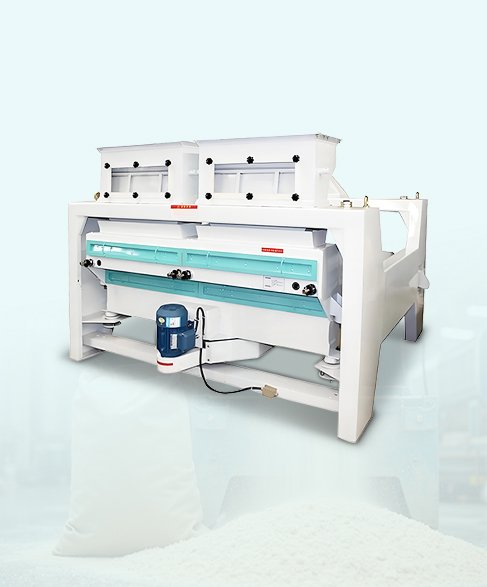
Pre-processing directly dictates your overall plant profitability over time. Milling raw paddy at incorrect moisture levels has severe financial impacts. Wet grain leads to incredibly high broken rates during husking. It also causes severe machine jamming across the entire processing line. Grain stored too wet will inevitably suffer from dangerous fungal growth.
You must evaluate your drying equipment options very carefully. Integrating a commercial Grain Dryer safeguards your fragile yield. First, decide between traditional batch and continuous drying models. You must match the dryer type to your peak harvest intake. Batch dryers work well for smaller, highly varied crop deliveries. Continuous models handle massive, uniform commercial loads best.
Next, evaluate heat source compatibility for major operational cost reduction. Biomass burners utilizing discarded rice husk offer massive financial savings. They essentially turn your factory waste into free heating fuel. They often outperform expensive gas or diesel burners dramatically.
Initial cleaning and de-stoning form your next line of defense. Raw grain arrives containing oversized impurities, dust, and heavy stones. You must remove these elements immediately before core processing begins. Vibratory screens effectively filter out large straw and string. Gravity destoners use targeted airflow to separate heavy rocks from lighter grain. Proper pre-cleaning protects downstream huller rollers from premature, costly wear. This single step saves you thousands in yearly replacement parts. It also guarantees a much cleaner final food product.
The core processing phase transforms rough paddy into market-ready rice. Husking and paddy separation initiate this critical physical transformation. We strongly recommend evaluating modern pneumatic rubber roller huskers. They provide optimal, consistent shelling pressure across varying grain sizes. Automated pneumatic systems adjust roller tension instantly as grain flows.
A dedicated paddy separator then plays a highly critical role. It uses specific gravity to ensure only pure brown rice advances. Any unhusked paddy cycles back to the husker automatically. If unhusked paddy slips through, it ruins your final batch quality.
Whitening and polishing represent your primary value-add phase. You must balance the specific degree of whiteness carefully. Aggressive milling strips the grain but increases unwanted breakage. We advise a hybrid approach using both emery and iron rollers. Emery rolls act like sandpaper to strip the bran layer gently. Iron rolls use friction to provide a smooth, clean finish. Water polishing systems offer the final aesthetic touch for consumers. They inject a microscopic mist of water during the friction process. They help you achieve a glossy, export-grade shelf appearance. They also remove residual bran dust to extend storage life significantly.
Grading and color sorting finalize your overall product quality. Length and thickness graders isolate premium head rice accurately. They utilize indented cylinders to separate broken pieces completely. Optical color sorting represents the pinnacle of modern quality control. It uses advanced multi-camera technology to scan every single grain. It instantly ejects discolored, diseased, or chalky grains using targeted air jets.
Finally, automated packaging radically reduces your manual labor dependencies. Weighing, bagging, and sealing systems handle factory output swiftly. Every component within your complete Rice Mill Machine setup must communicate seamlessly.
Building a commercial plant requires highly precise financial modeling. You must categorize your primary CapEx investments carefully from day one. This prevents disastrous budget overruns during the lengthy construction phase.
Here is a standardized chart mapping critical CapEx categories:
Investment Category | Typical Allocation (%) | Primary Components Included |
|---|---|---|
Land & Site Prep | 10 - 15% | Land acquisition, soil leveling, drainage systems |
Plant Housing | 20 - 25% | Foundations, structural framing, roofing, flooring |
Pre-Processing | 15 - 20% | Commercial dryers, storage silos, bucket elevators |
Core Milling Line | 40 - 50% | Huskers, automated sorters, control panels, ducting |
Hidden costs often surprise new commercial facility owners. Always account for heavy machinery freight and complex import duties. Local commissioning labor adds up quickly during a prolonged installation. You also need an initial spare parts inventory on day one.
Operational expenditure (OpEx) variables directly impact your daily profit margins. Track your factory electrical consumption extremely carefully. Measure it consistently in kilowatts per ton of grain produced. Workforce salaries and consumable replacements form your other main expenses. Monitor your rubber rolls, emery stones, and sieves diligently to avoid unexpected downtime.
Your ROI baseline metrics determine your ultimate commercial success. Calculate your project payback periods precisely before breaking ground. Base these calculations on localized paddy-to-white-rice price spreads. Factor in seasonal availability and local market fluctuations. High operational utilization rates will shorten your payback period substantially. Operating two shifts daily maximizes your expensive equipment investments.
Many commercial rollout failures stem from poor upfront planning. Misaligned equipment capacities present a massive, costly operational risk. For example, a 50 TPD cleaner cannot feed a 30 TPD whitener. This mismatch creates immediate operational bottlenecks across your floor. The larger machine will constantly pause to wait for the smaller one.
Inadequate dust collection causes equally severe factory issues. Milling generates massive amounts of highly combustible organic dust. Poor ventilation leads to strict compliance penalties and dangerous worker hazards. You must install high-capacity cyclone systems and advanced bag filters.
You must rigorously evaluate your shortlisted equipment suppliers. Relying on simple brochure promises invites disaster. Use strict Request for Proposal (RFP) criteria to filter out weak vendors.
Ask these fundamental questions when evaluating equipment suppliers:
Do they provide comprehensive 3D layout engineering before manufacturing begins?
What are the fully documented warranties on heavy wear parts?
Do they legally guarantee specific daily material throughput rates?
Do they dispatch experienced on-site engineers for the installation phase?
Will they provide thorough, hands-on operator training programs?
Your next step requires moving beyond simple budget estimation. Request a highly detailed site-specific layout from your shortlisted vendors. Demand a formalized quote detailing every single machinery component. Compare these quotes based on engineering value rather than just the lowest price. A cheaper initial quote often masks inferior steel quality or weak motors.
Setting up a profitable milling facility goes beyond basic procurement. It requires holistic, highly detailed mechanical plant engineering. You must view every production stage as an interconnected system. We emphasize the enormous long-term ROI of smart infrastructure planning. Investing heavily in quality moisture control always pays off quickly. Durable structural housing protects your entire mechanical operation. High-precision sorting guarantees a premium, highly profitable final product.
Consult immediately with specialized industrial engineering professionals. Ask them to draft a custom blueprint tailored to your specific land. Request a rigorous capacity feasibility study today to ensure lasting success. Establish strong vendor partnerships to keep your plant running optimally for decades.
A: A 50 TPD facility typically requires around 2,000 to 3,000 square meters. This includes processing, storage, and basic office space. A 100 TPD plant demands significantly more room. Expect to need 4,000 to 6,000 square meters. You must account for larger silos, extended drying yards, and wider truck turning lanes.
A: No, standard commercial grids rarely handle the massive load requirements. Industrial milling equipment causes significant power surges during startup. You will likely need a dedicated high-voltage transformer. Consult local utility providers early. Ensure your site can receive consistent three-phase industrial power to prevent severe motor damage.
A: Prefabricated steel framing offers massive clear-span interiors without structural pillars. This allows optimal machinery placement and easy future line expansion. Steel buildings deploy 30 to 40 percent faster than poured concrete. They also withstand intense machine vibrations better. Gravity-fed equipment requires significant vertical height easily achieved with steel.
A: Timeline variables depend heavily on your chosen capacity and vendor. Smaller 30 to 50 TPD plants usually take three to four months. Large-scale 100+ TPD facilities can take six to eight months. This includes structural erection, machinery placement, electrical wiring, and final dry-run testing before commercial production.
A: A highly optimized commercial plant typically yields 65 to 68 percent white rice. Rice husks account for roughly 20 percent of the total weight. Rice bran makes up another 8 to 10 percent. High-quality moisture control and precision milling equipment directly maximize your premium head rice yield.


