E-Mail: commercial@golden-cereal.com Tel: +86-187-6172-1218
- All
- Product Name
- Product Keyword
- Product Model
- Product Summary
- Product Description
- Multi Field Search


Views: 0 Author: Site Editor Publish Time: 2026-08-28 Origin: Site


Modern rice milling is far more than a basic agricultural step. It operates as a high-stakes industrial arena. Here, yield optimization dictates your ultimate profitability. Global markets demand visual perfection and consistent cooking qualities from every batch you produce. Traditional processing methods often relied on manual labor. Operators used rudimentary tools for dehulling and sorting. These outdated setups caused significant grain loss. They produced high breakage rates and inconsistent grading. Today, modern facilities use advanced sensors. They deploy precision machinery to maximize output. They reduce waste significantly during every operational hour. Upgrading or establishing a new mill demands a clear understanding of the exact processing flow. We will show you how to evaluate specific machinery logically. You must make evidence-based decisions regarding your capital investments. You will learn actionable strategies to select the right systems today. We aim to help you protect your grain yield entirely, from initial harvest intake to final retail packaging.
Maximizing head rice yield and minimizing broken grains are the primary KPIs for any milling operation.
The standard process flow involves pre-cleaning, husking, whitening, polishing, and optical sorting.
Selecting the right **rice mill equipment** requires balancing throughput capacity with energy efficiency and compliance standards.
Implementing industrial **food processing equipment** involves facility-level risks, including footprint constraints and dust management.
Outdated machinery drains your financial resources quickly. High breakage rates directly reduce your marketable premium product. Every fractured grain represents lost revenue. Broken rice often sells for half the price of premium head rice. It usually goes to animal feed or brewing markets. Energy waste further eats into your profit margins. Old, inefficient motors consume excessive electricity. Inconsistent grain grading damages your brand reputation globally. Retail buyers demand absolute uniformity in every bag they purchase.
Relying on obsolete setups forces operators into constant reactive maintenance. You lose valuable production time fixing broken belts. Jammed elevators halt the entire facility for hours. Upgrading your systems solves these critical operational bottlenecks. We see immediate financial turnarounds when facilities modernize.
What does a successful processing upgrade look like? First, you will see a noticeable increase in your overall recovery rate. Your facility should output a much higher percentage of premium head rice. You will experience lower machine downtime during peak harvest seasons. Modern setups provide consistent, predictable results hour after hour. When you invest in advanced Rice Processing Technology, your operational efficiency improves drastically. You gain real-time control over your entire production cycle.
However, you must remain skeptical of pure capacity claims. Higher-capacity machines do not automatically guarantee better yields. You must match the equipment perfectly to your specific paddy variety. Short-grain varieties require different handling than long-grain basmati. Facility conditions also play a huge role in overall performance. A massive machine running in a constrained space often causes bottlenecks elsewhere. Assess your raw material characteristics before buying larger motors. Your focus must remain on grain protection. Raw speed means nothing if you shatter the kernel.
Understanding the exact processing flow prevents costly integration mistakes. Each stage requires specific mechanical actions to prepare the grain. We break down the essential steps below. You must sequence these operations correctly to maximize your yield.
Raw paddy arrives at the facility straight from the field. It contains dirt, straw, weed seeds, and stones. You must remove these impurities immediately. They will destroy your downstream machinery rapidly. Destoners handle the heavy particles effectively. They use rapid vibration and targeted upward airflow. This action separates stones based on density differences. Effective pre-cleaning relies heavily on precision screening.
You need closed-circuit aspiration systems here. They capture airborne dust efficiently. They keep your facility air remarkably clean. Clean air protects your workers from respiratory issues. It also prevents delicate optical sensors from malfunctioning later. We advise investing in high-quality Rice mill equipment for this crucial stage. Proper cleaning forms the foundation of good milling.
The next step involves removing the tough outer husk. Husking machines typically use counter-rotating rubber rolls. One roll spins slightly faster than the other. This speed differential applies sheer force to the grain. It strips the husk away cleanly. Once husked, the mixture enters a paddy separator. This machine divides the brown rice from any remaining unhusked paddy. The unhusked grains return to the husker automatically.
Roll durability remains a critical differentiator in husking equipment. Cheap rubber wears down unevenly and requires frequent swaps. Automated pressure adjustments provide a massive operational advantage. Operators can maintain consistent husking rates easily. The machine adapts automatically as rubber rolls wear down over time. This automation prevents unnecessary grain breakage during the dehulling phase.
Brown rice contains a nutritious but perishable bran layer. You must remove this layer to produce commercial white rice. Abrasive whiteners use carborundum stones to scratch the bran away. Friction polishers then use iron rollers to gently rub the grains together. They strip the remaining bran away while leaving the endosperm intact. The rice emerges smooth and shiny.
However, a major tradeoff exists in this specific stage. A high degree of polishing directly increases grain breakage. Over-milling leads to significant yield loss and lower profits. Heat buildup inside the milling chamber causes internal kernel stress. Multi-pass whitening is the industry standard to combat this issue. Using multiple passes reduces thermal stress on the individual grains. Advanced Rice mill equipment keeps grain temperatures low proactively. Active cooling fans prevent cracking entirely.
The final processing stage ensures aesthetic perfection. Grading machines sift out broken grains using specialized vibrating screens. They separate the product into precise size categories. You can extract small broken grains for secondary markets easily. Optical sorting follows mechanical grading to remove defective kernels completely.
Color sorters use high-speed RGB and infrared cameras. They identify discolored, chalky, or diseased grains instantly. Precision sorting directly impacts the final market value of your product. Removing black-tipped rice elevates your brand quality significantly. Premium packaging requires absolute purity to command top retail prices. Buyers inspect visual quality first.
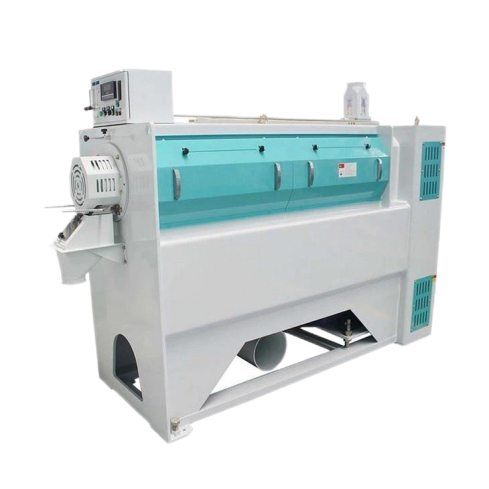
You need a logical framework to evaluate complex machinery. We recommend focusing on scalability, yield protection, automation, and vendor support. Do not buy based solely on brochure specifications.
Always assess whether the equipment handles seasonal peak loads. Harvest seasons bring massive influxes of raw paddy daily. Your machinery must run continuously without overheating or failing. Consider modular expansions for future facility growth. Can you add a second whitener later? Will you need to rebuild the entire plant? Scalable designs save capital when your business inevitably expands. You should plan for future capacity during the initial design phase.
Raw throughput means nothing if you shatter the grain. Evaluate how specific machine designs protect against grain fracture. Low-temperature whiteners serve as excellent examples of yield protection. They prevent heat buildup effectively. Heat causes internal kernel stress and subsequent snapping. Ask vendors for specific data on breakage reduction. Demand to see case studies involving your exact paddy variety.
Review the internal chamber design for smooth transitions.
Check the cooling fan capacity on whitening modules.
Evaluate the cushioning materials used in discharge chutes.
Assess the precision of the rubber roll pressure mechanisms.
Modern mills rely heavily on programmable logic controllers (PLCs). PLC systems offer real-time monitoring of critical machine metrics. Operators can track motor loads and throughput instantly. Data logging helps you identify hidden inefficiencies in the processing line. If a husker draws too much power, the PLC triggers an alert. This immediate feedback prevents catastrophic machine failures. It also helps you optimize energy consumption dynamically.
Do not base your decision purely on upfront machine costs. The vendor ecosystem matters much more for long-term success. Evaluate parts availability in your specific geographic region. Localized technical support prevents extended production downtime. Review the warranty terms carefully before signing any purchase order. A cheap machine becomes incredibly expensive later. Spare parts taking weeks to arrive will cripple your business.
Evaluation Metric | Standard Equipment | Advanced Equipment |
|---|---|---|
Control System | Manual dials and analog levers | PLC integration and touch screens |
Thermal Management | Basic ambient airflow | Active cooling and low-temp milling |
Yield Monitoring | Periodic manual sampling | Real-time inline data logging |
Dust Control | Open aspiration filter bags | Closed-circuit aspiration filters |
Pressure Adjustment | Manual hand-wheel tightening | Pneumatic automatic regulation |
Global food safety standards apply directly to modern milling operations. You must maintain rigorous hygiene protocols throughout your facility. Grain processing is food manufacturing. Regulators treat it exactly as such.
Sanitary design is no longer an optional feature. You must integrate proper Food processing equipment to meet international export standards. Regulatory bodies like the FDA require food-grade contact surfaces. Stainless steel components prevent bacterial growth and rust contamination. CE and ISO 22000 certifications prove your compliance. They show that your machinery meets strict safety guidelines. Hygienic machine designs also allow for faster cleaning routines. Sloped surfaces prevent dust accumulation in hidden corners. They eliminate breeding grounds for weevils and grain moths.
Milling operations generate massive amounts of combustible dust. Managing this dust is critical for a safe operator environment. Uncontrolled grain dust presents a severe explosion hazard. Facilities must follow ATEX directives or local equivalents. Implement high-efficiency cyclone separators and baghouse filters everywhere. Noise reduction is another crucial environmental control. Heavy machinery generates deafening noise levels. These loud environments harm workers permanently. Enclose loud motors and require proper hearing protection. Finally, ensure proper bran byproduct collection. Bran is a valuable secondary commodity. It sells well when stored and handled cleanly.
Installing new machinery rarely goes exactly as planned. You must anticipate common implementation risks. Foresight helps you avoid severe delays and budget overruns.
Retrofitting new technology into existing plant layouts presents massive challenges. You must decide between a vertical or horizontal process flow. Vertical layouts use gravity to move grain between machines. This setup requires significant building height. It often demands extensive structural reinforcement. Horizontal layouts require bucket elevators and pneumatic conveyors. Conveyors take up valuable floor space. They also increase energy consumption significantly. Always measure your existing footprint before ordering new machinery. Ensure you have adequate clearance for maintenance. Technicians need space to perform part replacements safely.
Many milling zones sit in rural agricultural areas. These regions often suffer from severe power supply volatility. Voltage fluctuations damage sensitive electronic sensors instantly. Unstable power grids burn out large three-phase motors frequently. You must address this risk proactively during facility design. Install robust motor protection relays and voltage stabilizers. Uninterruptible power supplies (UPS) protect your PLC systems during sudden blackouts. Do not assume your local grid can handle increased electrical loads. Run a full electrical audit first.
Transitioning to automated systems involves a steep learning curve. Operators accustomed to mechanical setups often struggle initially. They find digital controls confusing and abstract. Sensor-driven systems require analytical thinking rather than brute force. You must invest heavily in comprehensive operator training programs. Machine vendors should provide hands-on commissioning. They must deliver direct instruction on site. Document standard operating procedures clearly for your staff. Gradual adoption prevents costly user errors during the initial rollout phase. Support your team through the transition period.
Mastering how rice is processed serves as your baseline requirement. Your true competitive advantage lies in systematic, careful equipment evaluation. You must prioritize machinery that actively protects your grain yield. Efficient plants maximize premium outputs while controlling power and labor variables tighty.
Here are your next actionable steps to move forward:
Prioritize manufacturers offering transparent yield-guarantee data over those competing purely on price.
Request pilot-testing capabilities to run your specific paddy through their machines before buying.
Conduct a comprehensive facility audit to identify footprint constraints and structural limitations.
Review your plant layout designs with a structural engineer and an electrical contractor.
Calculate your potential ROI based on localized paddy input and projected premium head rice recovery.
A: A realistic recovery rate typically ranges between 65% and 70%. This percentage depends heavily on the initial paddy quality and moisture content. No manufacturer can guarantee absolute numbers without testing your specific raw material first. Proper moisture levels and well-calibrated machines push yields closer to the optimal 70% benchmark.
A: Optical sorters drastically improve ROI by ensuring a 99.9% pure final product. They remove discolored, chalky, or diseased grains that degrade quality. This visual perfection allows you to package your product as premium grade. Premium rice commands significantly higher market prices, easily offsetting the initial machine investment.
A: Rubber husking rolls generally process between 150 and 300 tons before needing replacement. Abrasive rollers in whiteners can last several thousand tons depending on grain hardness. These are consumable parts requiring regular inspection. Proactive replacement schedules prevent unexpected downtime and maintain consistent milling pressure.
A: Yes, you can integrate individual machines into existing lines. However, you must carefully evaluate standard dimensions, input capacities, and mechanical compatibility. PLC integration often presents challenges when connecting new digital equipment to older analog systems. Always consult an integration specialist to ensure seamless handoffs between machines.


