The ROTARY CLEANING MACHINE is a high-performance cleaning equipment under the Rice Mill Machine category, designed by Golden-Cereal™ to efficiently remove impurities from grains during processing. As a core component in grain processing lines, it plays a critical role in enhancing grain purity, ensuring downstream processing (such as husking, whitening, or grading) operates smoothly.
| Availability: | |
|---|---|
| Quantity: | |
Model | TQLM125*2 | TQLM160*2 | TQLM200*2 |
Capacity(t/h) | 6-9 | 8-12 | 10-15 |
Power(kw) | 0.75 | 1.1 | 1.1 |
Air volume(m³/min) | 55+25 | 70+32 | 90+40 |
Weight(kg) | 730 | 950 | 1100 |
Dimension(mm) | 2150*1650*1470 | 2150*2010*1470 | 2150*2460*1470 |
Available in three models—TQLM125*2, TQLM160*2, and TQLM200*2—this machine caters to varying production scales, with a capacity range of 6-15 t/h. Its innovative design integrates multiple motion patterns and dust control features, making it a reliable choice for modern grain processing facilities seeking consistency and efficiency. Whether used in small-scale rice mills or large grain processing plants, the ROTARY CLEANING MACHINE delivers consistent results, reducing manual intervention and optimizing overall workflow.
A standout feature of the ROTARY CLEANING MACHINE is its three distinct motion trajectories on a single sieve plate. The feed end of the sieve swings horizontally from left to right, while the central body performs a flat circular motion. This combined movement promotes seamless material flow and automatic classification of grains by size and density, ensuring thorough separation of impurities like stones, chaff, and broken grains.
The machine is equipped with an airtight sieve body paired with a built-in suction device, significantly minimizing dust emissions during operation. This not only creates a healthier working environment but also reduces the need for additional dust collection systems, lowering overall operational costs.
Featuring a four-point suspended sieve structure, the ROTARY CLEANING MACHINE operates with minimal vibration, ensuring smooth and stable performance even during extended use. This design enhances durability, reducing wear and tear on components and extending the machine’s service life.
Key technical parameters vary by model to suit different production needs:
· TQLM125*2: Capacity of 6-9 t/h, power of 0.75 kw, air volume of 55+25 m³/min, weight of 730 kg, and dimensions of 215016501470 mm.
· TQLM160*2: Capacity of 8-12 t/h, power of 1.1 kw, air volume of 70+32 m³/min, weight of 950 kg, and dimensions of 215020101470 mm.
· TQLM200*2: Capacity of 10-15 t/h, power of 1.1 kw, air volume of 90+40 m³/min, weight of 1100 kg, and dimensions of 215024601470 mm.
The ROTARY CLEANING MACHINE is highly versatile, suitable for cleaning a wide range of grains, including rice, wheat, corn, millet, and barley. It effectively removes impurities such as dirt, straw, stones, and immature grains, ensuring the processed grains meet high-quality standards.
· Rice Mills: Integral to pre-husking and pre-whitening stages, improving the efficiency of subsequent rice processing steps.
· Grain Storage Facilities: Used to clean bulk grains before storage, preventing mold growth and pest infestations caused by impurities.
· Food Processing Plants: Ensures raw materials are clean and pure, enhancing the quality of final food products (e.g., flour, cereals).
· Agricultural Cooperatives: Helps small to medium-scale farmers process harvested grains for better market value.
The primary purpose is to remove impurities (such as stones, chaff, and dust) from grains, improving grain purity and preparing them for downstream processing like husking, whitening, or grading.
With three models (TQLM1252, TQLM1602, TQLM200*2), it accommodates capacities from 6-15 t/h, making it suitable for both small-scale and large-scale operations.
No. Its four-point suspended sieve design reduces vibration and wear, minimizing maintenance needs. Regular checks of the sieve plate and suction device are sufficient to ensure optimal performance.
Yes. The airtight sieve body and built-in suction device effectively control dust, making it suitable for use in environments where dust management is critical, such as food processing plants.
Absolutely. It seamlessly integrates with other Rice Mill Machine components, such as destoners, paddy huskers, and rice graders, forming a complete grain processing line.
Power requirements vary by model: 0.75 kw for TQLM1252 and 1.1 kw for TQLM1602 and TQLM200*2, compatible with standard industrial power supplies.
The ROTARY CLEANING MACHINE combines innovative design, durable construction, and versatile performance to meet the demands of modern grain processing. Its ability to handle multiple grain types, reduce dust, and integrate with existing lines makes it a valuable asset for any facility aiming to enhance efficiency and product quality.
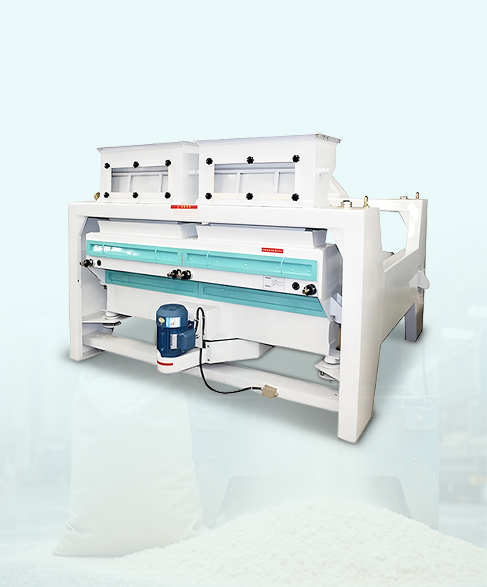
This high efficientrotary vibrating cleaning machine has gathered differentfunctions in one, can efficiently remove different sizes'impurities.
Use screw rollerfeeding device, The full width of the screen surface is uniform, with step-less output capacity adjustment, digital display, simple and intuitive.
Airtight de-dust device, with less dust.
Use cardan flexible suspension system,which makes the machine work smoothly.
The cardan is durable, machine performs verystable.
Onelayer with brush cleaning structure, can automatically clean outimpurities.
Output capacity of single machineis big.
The ROTARY CLEANING MACHINE is a high-performance cleaning equipment under the Rice Mill Machine category, designed by Golden-Cereal™ to efficiently remove impurities from grains during processing. As a core component in grain processing lines, it plays a critical role in enhancing grain purity, ensuring downstream processing (such as husking, whitening, or grading) operates smoothly.
Unique selection chamber to separate stones from grain,especially errective for brown rice.
Unique sieve structure to save blowing rate.
Negative-pressure air suctionto prevent dust from escaping the machine.
Equipped with three main models—TQSX85B, TQSX100B, and TQSX125A—the machine caters to diverse production scales, with capacity ranging from 3.5-4.5 t/h to 7-8.5 t/h. Its advanced design ensures exceptional performance in removing impurities, especially for sensitive grains like brown rice, where preserving grain integrity is critical. Whether integrated into small rice mills or large-scale grain processing plants, this destoner enhances product quality by reducing impurity levels to below 0.1%, meeting international food safety standards.
Ideal for modern agricultural processing facilities, it integrates pneumatic technology with robust engineering to deliver consistent performance across varying operational scales. Whether deployed in small rural mills or large industrial complexes, this husker ensures high husking rate (up to 98%) and low grain damage (below 2%), making it a cornerstone for businesses prioritizing quality and productivity. Its adaptability to diverse paddy varieties and climates further solidifies its position as a versatile solution in global grain processing markets.
Learn how to specify the right grain conveyor belt to prevent dust explosions, oil damage, and downtime. Engineering-first guide for safety and ROI.
Learn how grain conveyors work and compare belt, drag, pneumatic & tubular systems to minimize kernel damage, boost throughput, and ensure safety.
Evaluate grain processing equipment with our guide. Cut breakage, maximize yield, and avoid costly downtime with proven procurement criteria.
Maximize rice milling yield and reduce broken grains. Expert guide to evaluating rice mill equipment for premium quality and ROI.
Maximize yield and cut energy waste. Compare dry, wet, and hydrothermal grain processing methods to choose the best equipment for your facility.
Learn how paddy huskers and separators work together to boost rice milling efficiency, reduce breakage, and maximize whole-kernel yield.
Pre-cleaning protects rice mills from costly damage. Discover how destoners and cleaners ensure pure grain, maximize yield, and meet safety standards.
Facing margin compression and labor shortages? A modern automatic rice mill plant reduces breakage, stabilizes energy costs, and scales your output.
Select the right rice mill dust collector to prevent abrasive wear, explosions, and health hazards while maximizing uptime.
Guide to selecting the best commercial Rice Mill Machine and optimizing the 5-step milling process for maximum yield and efficiency.
Optimize commercial paddy processing. Learn how to select grain dryers and rice mill machines to maximize Head Rice Yield and boost ROI.
Build a profitable commercial rice milling plant. Learn about essential machinery, steel structures, CapEx modeling, and vendor selection.
Calculate rice mill setup costs and optimize ROI with this guide on CAPEX/OPEX, machinery selection, and steel structure facility design.
Compare steel structures vs. concrete for agricultural plants. Discover key insights on construction speed, clear-span space, hygiene, and ROI.
The journey from harvested paddy to polished white rice is far more than a simple transformation; it's a high-stakes commercial operation centered on yield optimization and market grade. For modern millers, success isn't just about processing grain—it's about maximizing the recovery of whole, unbrok
The modern rice milling industry has transformed dramatically, moving away from labor-intensive manual processes to highly automated, efficient systems. While hullers, polishers, and sorters often take the spotlight, the true drivers of profitability are the "silent" heroes of the mill: material han
In the competitive global market, a fine line separates simply "milled" rice from "premium" rice. This precision gap is not just about basic processing; it's about achieving a final product with superior aesthetics, texture, and shelf life. The final gatekeepers in this transformation are the whiten
In the fiercely competitive global market, the definition of quality rice has evolved dramatically. It's no longer sufficient for rice to be merely clean; consumers and international buyers demand absolute uniformity, pristine appearance, and guaranteed safety. This shift places immense pressure on
The journey from raw paddy to premium, market-ready rice is a marvel of mechanical precision. The critical link in this value chain is the milling equipment you choose. Your selection directly dictates profit margins, product quality, and operational efficiency. Many new plant owners fall into the t