| Availability: | |
|---|---|
| Quantity: | |
Model | MPGW19C | MPGW158 | MPGW170 | MPGW1885 |
Output(t/h) | 2-3.5 | 4-6 | 5-7 | 6-9 |
Power(kw) | Host:37-45 Wind turbine:7.5 | Host:45-55 Wind turbine:15 | Host:55-75 Wind turbine:15 | Host:55-75 Wind turbine:15 |
Air volume(m³/h) | 2000-2500 | 3000-3500 | 3500-4000 | 3500-4000 |
Water pressure(Mpa) | 0.25-0.3 | 0.25-0.3 | 0.25-0.3 | 0.25-0.3 |
Dimension(mm) | 1965*800*2155 | 2520*850*2200 | 2715*900*2200 | 2860*900*2270 |
Weight(kg) | 1270 | 1840 | 1900 | 2160 |
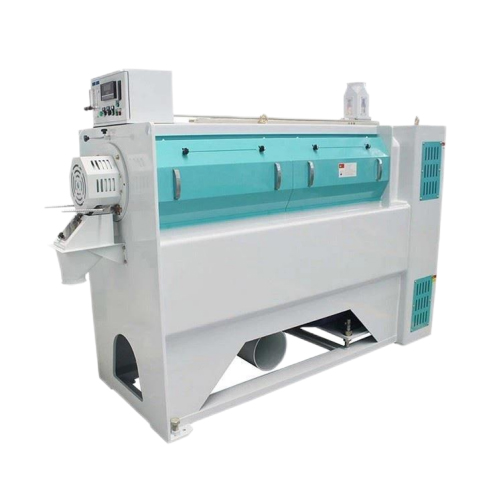
The Horizontal Rice Water Polisher represents a sophisticated solution for achieving premium quality polished rice through precision processing. Designed for integration into modern rice milling lines, this equipment transforms milled rice into glossy, clean grains with enhanced market appeal while maintaining nutritional value. The MPGV-80M model, a representative of this category, delivers an impressive processing capacity of 5 to 7 tons per hour, making it suitable for medium to large-scale rice processing facilities aiming to produce high-value rice products.
Utilizing a water mist polishing technique combined with gentle abrasive action, this horizontal polisher removes surface bran particles while creating a smooth, reflective surface on each grain. The result is rice with improved appearance, reduced breakage during cooking, and extended shelf life due to the removal of fat-rich bran layers that can cause rancidity.
The polisher features two horizontally aligned stainless steel rollers (1800mm length) that rotate in opposite directions, creating a gentle scrubbing action that removes remaining bran without excessive grain breakage. This dual-roller design ensures uniform polishing across the entire grain surface, achieving consistent quality throughout the batch.
An integrated water delivery system applies a fine mist (5-10ml per kg of rice) during the polishing process, which helps soften surface bran for easier removal while preventing excessive moisture absorption. The water flow is precisely controlled by a PLC system that adjusts based on rice variety and desired polish level.
The main drive system utilizes two high-efficiency motors (total 75 kW) with variable frequency control, allowing operators to adjust processing speed according to rice type and condition. The system's energy recovery features reduce overall power consumption, achieving a specific energy usage of less than 12 kWh per ton of processed rice.
A powerful suction system (15 kW blower) removes polished bran particles through a cyclone separator, ensuring efficient collection and preventing recontamination of polished rice. The closed-loop design minimizes dust emissions, improving workplace air quality and meeting environmental regulations.
Specialized rice mills producing high-quality varieties such as basmati, jasmine, and arborio rice utilize this polisher to achieve the glossy appearance and texture demanded by premium markets. The precise control over polishing intensity allows customization for different consumer preferences across regional markets.
In facilities producing parboiled rice, pre-cooked rice, and rice for sushi preparation, the water polisher ensures the consistent texture and appearance required for these specialized products. The controlled moisture application helps maintain optimal cooking characteristics.
For rice destined for international markets, the polisher plays a critical role in meeting strict quality standards for cleanliness and appearance. Its ability to produce uniformly polished rice enhances marketability and can command premium prices in competitive global markets.
The polishing process removes primarily the outer bran layer, which contains fiber and some fats, while preserving the starchy endosperm that constitutes the majority of the grain's nutritional content. By controlling polishing intensity, operators can balance appearance requirements with nutritional retention, typically removing 5-8% of the grain weight in premium polishing settings.
The polisher requires clean water with low mineral content (less than 100 ppm total dissolved solids) to prevent mineral deposits on rice grains and equipment surfaces. A water filtration system is included to treat incoming water, and the mist nozzles are designed for easy cleaning to prevent clogging.
The operator can adjust three key parameters: roller speed (variable between 300-500 rpm), water application rate, and processing time. Short-grain varieties typically require higher moisture levels and slower speeds, while long-grain rice benefits from lower moisture and faster processing to maintain grain length. Preset programs for common varieties simplify operation while allowing for custom settings.

This high efficientrotary vibrating cleaning machine has gathered differentfunctions in one, can efficiently remove different sizes'impurities.
Use screw rollerfeeding device, The full width of the screen surface is uniform, with step-less output capacity adjustment, digital display, simple and intuitive.
Airtight de-dust device, with less dust.
Use cardan flexible suspension system,which makes the machine work smoothly.
The cardan is durable, machine performs verystable.
Onelayer with brush cleaning structure, can automatically clean outimpurities.
Output capacity of single machineis big.
The ROTARY CLEANING MACHINE is a high-performance cleaning equipment under the Rice Mill Machine category, designed by Golden-Cereal™ to efficiently remove impurities from grains during processing. As a core component in grain processing lines, it plays a critical role in enhancing grain purity, ensuring downstream processing (such as husking, whitening, or grading) operates smoothly.
Unique selection chamber to separate stones from grain,especially errective for brown rice.
Unique sieve structure to save blowing rate.
Negative-pressure air suctionto prevent dust from escaping the machine.
Equipped with three main models—TQSX85B, TQSX100B, and TQSX125A—the machine caters to diverse production scales, with capacity ranging from 3.5-4.5 t/h to 7-8.5 t/h. Its advanced design ensures exceptional performance in removing impurities, especially for sensitive grains like brown rice, where preserving grain integrity is critical. Whether integrated into small rice mills or large-scale grain processing plants, this destoner enhances product quality by reducing impurity levels to below 0.1%, meeting international food safety standards.
Ideal for modern agricultural processing facilities, it integrates pneumatic technology with robust engineering to deliver consistent performance across varying operational scales. Whether deployed in small rural mills or large industrial complexes, this husker ensures high husking rate (up to 98%) and low grain damage (below 2%), making it a cornerstone for businesses prioritizing quality and productivity. Its adaptability to diverse paddy varieties and climates further solidifies its position as a versatile solution in global grain processing markets.
Learn how to specify the right grain conveyor belt to prevent dust explosions, oil damage, and downtime. Engineering-first guide for safety and ROI.
Learn how grain conveyors work and compare belt, drag, pneumatic & tubular systems to minimize kernel damage, boost throughput, and ensure safety.
Evaluate grain processing equipment with our guide. Cut breakage, maximize yield, and avoid costly downtime with proven procurement criteria.
Maximize rice milling yield and reduce broken grains. Expert guide to evaluating rice mill equipment for premium quality and ROI.
Maximize yield and cut energy waste. Compare dry, wet, and hydrothermal grain processing methods to choose the best equipment for your facility.
Learn how paddy huskers and separators work together to boost rice milling efficiency, reduce breakage, and maximize whole-kernel yield.
Pre-cleaning protects rice mills from costly damage. Discover how destoners and cleaners ensure pure grain, maximize yield, and meet safety standards.
Facing margin compression and labor shortages? A modern automatic rice mill plant reduces breakage, stabilizes energy costs, and scales your output.
Select the right rice mill dust collector to prevent abrasive wear, explosions, and health hazards while maximizing uptime.
Guide to selecting the best commercial Rice Mill Machine and optimizing the 5-step milling process for maximum yield and efficiency.
Optimize commercial paddy processing. Learn how to select grain dryers and rice mill machines to maximize Head Rice Yield and boost ROI.
Build a profitable commercial rice milling plant. Learn about essential machinery, steel structures, CapEx modeling, and vendor selection.
Calculate rice mill setup costs and optimize ROI with this guide on CAPEX/OPEX, machinery selection, and steel structure facility design.
Compare steel structures vs. concrete for agricultural plants. Discover key insights on construction speed, clear-span space, hygiene, and ROI.
The journey from harvested paddy to polished white rice is far more than a simple transformation; it's a high-stakes commercial operation centered on yield optimization and market grade. For modern millers, success isn't just about processing grain—it's about maximizing the recovery of whole, unbrok
The modern rice milling industry has transformed dramatically, moving away from labor-intensive manual processes to highly automated, efficient systems. While hullers, polishers, and sorters often take the spotlight, the true drivers of profitability are the "silent" heroes of the mill: material han
In the competitive global market, a fine line separates simply "milled" rice from "premium" rice. This precision gap is not just about basic processing; it's about achieving a final product with superior aesthetics, texture, and shelf life. The final gatekeepers in this transformation are the whiten
In the fiercely competitive global market, the definition of quality rice has evolved dramatically. It's no longer sufficient for rice to be merely clean; consumers and international buyers demand absolute uniformity, pristine appearance, and guaranteed safety. This shift places immense pressure on
The journey from raw paddy to premium, market-ready rice is a marvel of mechanical precision. The critical link in this value chain is the milling equipment you choose. Your selection directly dictates profit margins, product quality, and operational efficiency. Many new plant owners fall into the t